
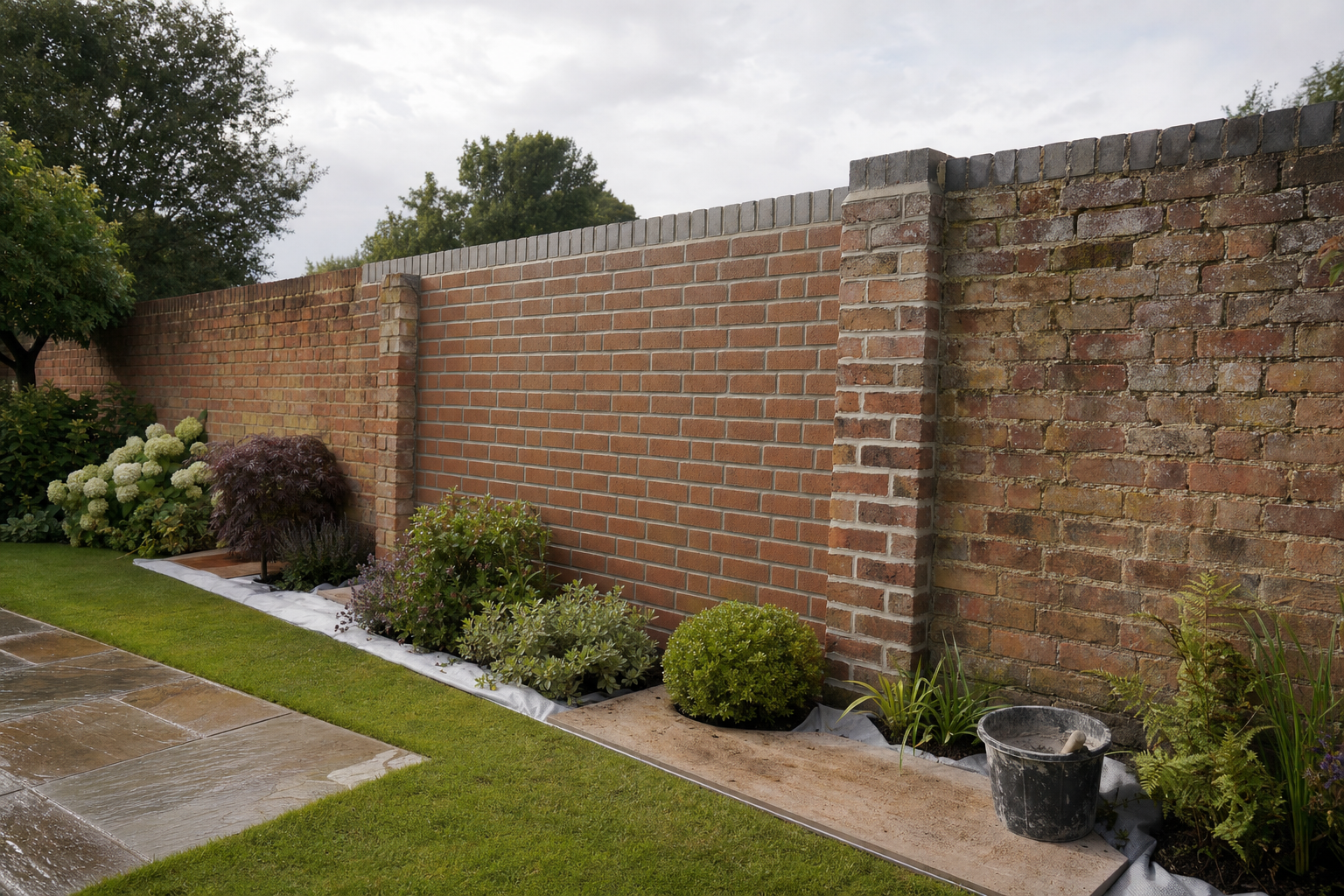
What well-pointed garden walls gain
Better defence against rain
Fresh joints help stop water working deeper into exposed boundary masonry.
Practical care around gardens
We plan access around planting, soil and boundaries so the work area stays manageable.
Problems spotted early
We check for leaning, loose courses and damaged bricks before pointing starts.
Freestanding walls weather from both sides at once
Garden walls have a harder life than many people think. They are exposed on multiple faces, the wall tops often take the worst of the rain, and movement or damaged copings can leave the joints breaking down faster than expected. Before any pointing starts, we look at the wall's stability because leaning sections, loose courses or damaged bricks may point to a wider repair need. If the wall is sound enough to proceed, we remove failed mortar, clear accessible joints and apply a compatible finish across the visible faces and exposed tops. With Brookes Brick and Point Ltd, the job is about more than tidying a boundary. Properly pointed joints help the wall shed weather better and slow further deterioration where it is most exposed.

Preparation around the garden keeps the work practical
Planting, soil levels, paths, boundaries and access all affect how the work is carried out. We look at how the joints can be reached, what needs protecting and how the fresh mortar can cure properly once it is in place. A garden wall pointing job from Brookes Brick and Point Ltd is planned around those ordinary site details because they make the difference between a smooth repair and a job that tramples through the flower bed for no good reason. We explain if a wall only needs pointing or if local rebuilding or brick replacement would make more sense first.
Frequently asked questions
Can a leaning garden wall just be pointed?
Not always. If the wall is leaning, moving or has loose courses, that may indicate a wider stability issue that pointing alone will not cure. We assess the condition first and explain whether the wall is suitable for pointing or whether repair work needs to come before fresh mortar.
Do we need to clear plants away before you start?
It depends on how close the planting is to the work area and whether the joints can be reached properly. We discuss access and practical preparation before the job begins so you know what needs moving, what can stay, and how the wall will be worked on without needless disruption.
Why do the top joints on a garden wall fail first?
Wall tops and areas around copings are often the most exposed parts of a freestanding wall, taking rain from above as well as weather from both faces. Once those joints open up, more water can work in and frost has a better chance to break the masonry down further.